
The Impact of AI on the Mortgage Market
By Sardis Group
As part of an ongoing effort to share relevant perspectives with our partners, we periodically circulate select third-party research, data points, and market observations that we believe are interesting and timely. These notes are intended to be concise and informational, simply highlighting items that have caught our attention and may be useful as you think about portfolio positioning and broader market developments. All materials are fully attributed to their original authors.
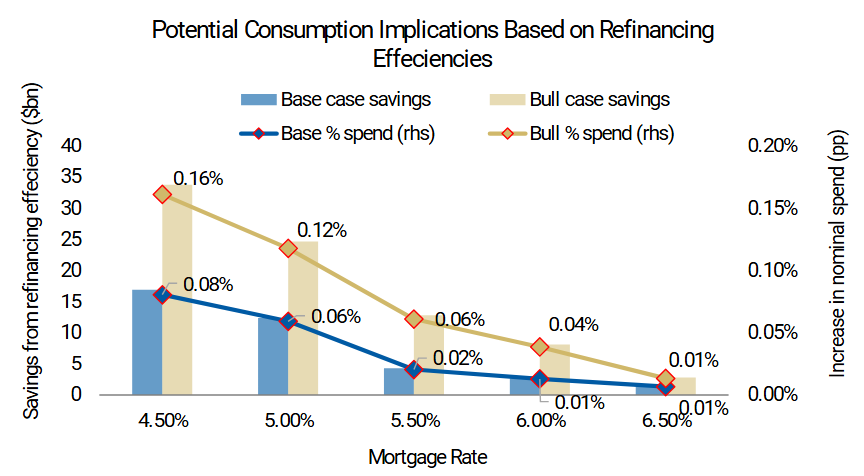
Over the past 25 years, only ~29% of homeowners with a 100bps rate incentive actually refinanced, as transmission frictions, not economics, kept most would-be refinancers on the sidelines. During COVID, when borrowers had both the time and incentive, that figure jumped to ~42%. AI agents that monitor rates, shop lenders, and handle documentation could close much of that gap going forward. Morgan Stanley’s base case has refinancing efficiency moving toward ~60% within 3–5 years if rates rally 100bps.
Homeowners are currently sitting on a record amount of equity
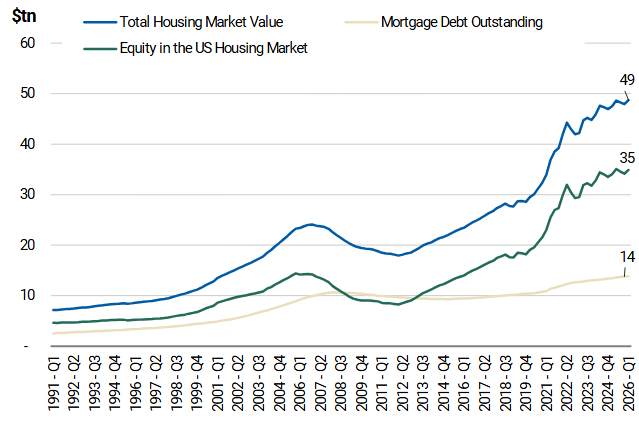
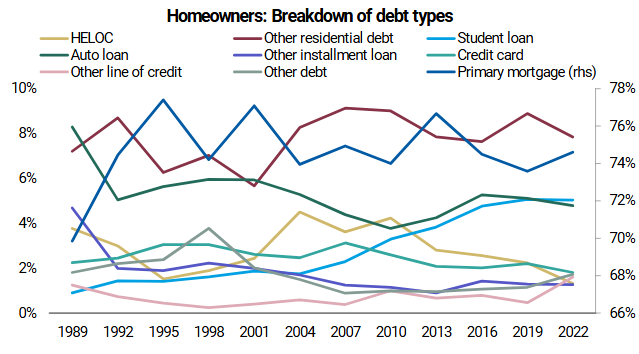
At the household level, the savings could be meaningful even if the macro effect stays modest. If mortgage rates rallied to 5.5%, an estimated $4.3 billion would flow through as extra annual refinancing savings, enough to meaningfully lower debt service ratios. Homeowners are also sitting on a record amount of home equity, and easier access to it could accelerate consolidation of higher-cost debt (credit cards, personal loans) alongside increased spending on home improvement and other home-related categories.
More expensive debts such as credit card debt would likely be consolidated if AI-led refi savings were to occur
The remainder of refinancing savings would likely drive minor boosts to consumption
If you would like to discuss these charts or anything else with respect to the market, please do not hesitate to reach out. As always, we appreciate your partnership.
Want to discuss?
Reach out to the team for additional commentary or to be added to our distribution list.
Contact Us Back to Insights